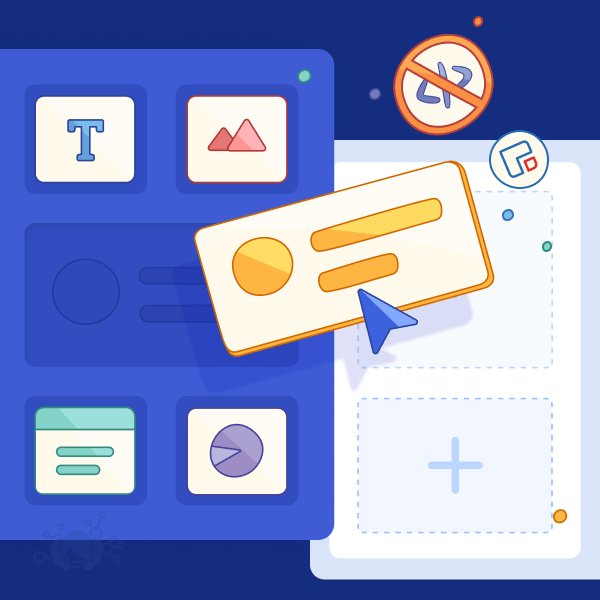
Traditional app development takes months and costs thousands. Drag-and-drop development changes everything: business users can build custom applications in days, not months, reducing costs by up to 80% while creating solutions that perfectly match their workflows.
Is Your ERP Ready for Digital Transformation 2026?
Table of Content
- Legacy ERP Isn't Broken, It's Just Too Slow for What's Next
- Innovation #1: Scalability Meets Speed—The Cloud Advantage
- Innovation #2: From Reactive to Predictive—The AI-Driven ERP
- Innovation #3: Build What You Need, When You Need It
- Innovation #4: When Machines Talk — ERP Listens
- Innovation #5: Trust Is the New Competitive Edge
- Innovation #6: Tomorrow's ERP Measures Impact, Not Just Output
- ERP in 2026
- Bridging Vision with Execution - The Incquet Way
- 2026 Is Closer Than It Seems
- Future-Ready ERP Starts Here
Is Your ERP Ready for Digital Transformation 2026?
Key Innovations Driving Your Business Scale
by Ajinkya Sawant | 21 October, 2025 | 14 Min Read
Here’s an uncomfortable truth: most enterprise resource planning systems running today were designed for a world that no longer exists. They were built for stability, predictability, and controlled growth. They excel at recording transactions, managing workflows, and maintaining compliance.
But businesses in 2026 don’t just need systems that remember, they need systems that think.
Today’s enterprises operate at the speed of AI-driven insights, real-time analytics, and instant market shifts. Customer expectations evolve daily. Supply chains span continents and adapt hourly. Teams work from everywhere, and decisions can’t wait for batch processing or overnight reports.
So here’s the question that matters: Is your ERP an asset, or a bottleneck?
If your finance team still waits 48 hours for reconciliation reports, if your inventory forecasts rely on last month’s data, if integrating a new business unit takes six months of consulting, your ERP isn’t keeping pace with your ambitions.
The good news? The next generation of ERP is already here. And it’s not just faster, it’s fundamentally smarter.
"Legacy ERPs Aren't Broken, They're Just Not Built for Custom Solutions, Today's Business Needs"
Let’s be clear: there’s nothing inherently wrong with traditional ERP systems. They work. They’re reliable. Many have been the backbone of operations for decades.
The problem isn’t that they’re broken, it’s that they were built for a different era.
Traditional ERP platforms are architecturally rigid. They require costly customizations for even minor changes. Integrations are complex, time-consuming projects rather than plug-and-play connections. Updates are disruptive events, not seamless improvements. And when business needs evolve, which they always do—these systems resist rather than adapt.
Meanwhile, the world around them has transformed:
- Distributed operations are the norm, not the exception. Teams collaborate across time zones, and data needs to flow seamlessly between locations.
- Real-time decision-making has replaced periodic reviews. Waiting until month-end to understand performance is like driving while looking in the rear-view mirror.
- Connected ecosystems demand integration. Your ERP doesn’t exist in isolation—it needs to talk to CRM, e-commerce platforms, IoT devices, supply chain partners, and emerging technologies.
- Customer expectations have skyrocketed. Speed, personalization, and transparency are table stakes.
Here’s the reality: ERP modernization isn’t about keeping up with technology trends. It’s a survival strategy for digital-first enterprises. The organizations that act now will lead the next cycle of transformation. Those that wait will spend the next decade playing catch-up.

The shift to cloud-native ERP isn’t just about moving servers off-premise. It’s about fundamentally reimagining how enterprise systems operate.
Cloud-first ERP architectures deliver what traditional on-premise systems can’t:
Deployment velocity. What once took 12-18 months can now launch in weeks. Updates roll out continuously without disrupting operations. New modules activate with configuration, not consultation.
True scalability. Growing from 100 to 1,000 users doesn’t require infrastructure overhauls or capacity planning meetings. Seasonal spikes don’t crash systems. Geographic expansion doesn’t mean duplicate implementations.
Accessible anywhere. Your CFO reviews dashboards from Singapore. Your warehouse manager updates inventory from the floor. Your sales team accesses customer data from client sites. All in real time, all securely.
Reduced maintenance burden. No more upgrade cycles that consume months of IT resources. No hardware refresh projects. No patch management headaches. Your team focuses on innovation, not infrastructure.
But here’s what matters most: cloud-native ERP enables integration at a pace that legacy systems simply cannot match. APIs are built-in, not bolted on. Third-party connections happen in hours, not months. And when new technologies emerge—and they will—your system is ready to evolve with them.
In 2026, ERP systems that aren’t cloud-ready will fall behind in integration velocity and innovation capacity. The question isn’t whether to move to the cloud, it’s how quickly you can get there strategically.
Innovation #2: From Reactive to Predictive—The AI-Driven ERP
This is where ERP stops being a record keeper and becomes a decision partner.
Artificial intelligence is transforming ERP from a system that tells you what happened into one that predicts what’s coming and recommends what to do about it.
Consider these practical applications already deployed in modern ERPs:
Predictive inventory management. Instead of reordering based on historical averages, AI analyzes seasonal patterns, market trends, supplier lead times, and demand signals to optimize stock levels dynamically. The result? Less capital tied up in inventory, fewer stockouts, and better cash flow.
Intelligent anomaly detection. AI continuously monitors transactions, flagging unusual patterns that humans might miss. A vendor invoice that’s 15% higher than historical norms. An expense claim submitted from an unexpected location. A supplier payment that doesn’t match purchase order terms. These insights surface automatically, before they become problems.
Automated reconciliations. What once required days of manual matching now happens in minutes. AI learns your business rules, handles exceptions intelligently, and escalates only what truly needs human judgment.
Dynamic forecasting. Sales projections that adjust in real time as market conditions shift. Cash flow predictions that account for seasonal variations and payment behaviors. Resource planning that anticipates bottlenecks before they occur.
Here’s an insight from our work at Incquet Solutions: we’ve seen AI-integrated ERP workflows reduce decision cycles by over 40%. Not because people work faster, but because the right information reaches the right person at exactly the right moment, with context, recommendations, and confidence scores attached.
The AI-driven ERP doesn’t just answer questions faster. It asks better questions. It surfaces insights you didn’t know to look for. It turns data into foresight.
Innovation #3: Build What You Need, When You Need It
The era of all-or-nothing ERP implementations is ending. Welcome to composable, modular ERP architecture.
Traditional ERP required you to adopt entire suites of functionality—even modules you didn’t need, because everything was tightly coupled. Want financial management? You’re getting procurement too, whether you need it or not. Need inventory tracking? The HR module comes along for the ride.
Composable ERP flips this model. You start with core capabilities and add precisely what you need, when you need it. Think of it as building with LEGO blocks rather than installing a pre-built structure.
The advantages are transformative:
- Lower initial investment. Deploy core functionality first, expand as ROI justifies it.
- Faster time to value. Implement the 20% of features that drive 80% of your value, then iterate.
- Agility without technical debt. Add a customer portal this quarter. Integrate IoT sensors next quarter. Launch in a new market the quarter after. All without ripping and replacing your foundation.
- Best-of-breed integration. Use the specialized tools your teams love while keeping ERP as the system of record.
Innovation #4: When Machines Talk — ERP Listens
The Internet of Things is bringing the physical world into your ERP’s field of vision, and it’s changing what’s possible.
Modern ERP systems aren’t just tracking what happens at keyboards and touchscreens—they’re listening to sensors, machines, vehicles, and devices across your entire operation.
On the manufacturing floor: Production equipment reports performance metrics in real time. Predictive maintenance alerts trigger automatically when sensors detect anomalies. Quality control data flows directly from inspection devices into your ERP, eliminating manual data entry and transcription errors.
In the supply chain: GPS trackers provide live shipment visibility. Temperature sensors ensure cold chain compliance. RFID tags enable instant inventory verification. Your ERP knows where every asset is, what condition it’s in, and when it will arrive—without a single phone call or email.
Across facilities: Energy management systems report consumption patterns. Environmental sensors monitor conditions. Access control systems integrate with workforce management. Your ERP becomes the central nervous system that connects and coordinates all these data streams.
And here’s where it gets really interesting: digital twins, virtual replicas of physical assets, processes, or systems that update in real time based on IoT data. Imagine simulating the impact of a production line change before making it. Or stress-testing your supply chain against various disruption scenarios. Or optimizing warehouse layouts based on actual movement patterns rather than assumptions.
In 2026, ERP is no longer just the memory of your enterprise, it’s the nervous system. It senses, responds, and optimizes continuously based on real-world conditions.
The question isn’t whether to connect your operations, it’s how quickly you can turn connection into competitive advantage.
Innovation #5: Trust Is the New Competitive Edge
In an era of increasing cyber threats and tightening regulations, security and compliance aren’t just IT concerns, they’re business imperatives.
The ERP systems of 2026 are being built with security baked into every layer, not bolted on as an afterthought.
Zero-trust architecture is becoming the standard. Every access request is verified, every transaction is validated, and every user operates with precisely the permissions they need—nothing more. The old model of “trust but verify” has evolved into “never trust, always verify.”
AI-powered threat detection monitors for suspicious patterns continuously. An employee suddenly accessing financial records they’ve never viewed before. A vendor payment request that arrives outside normal business hours. A data export that’s larger than historical patterns. These anomalies trigger alerts before they become breaches.
Audit-ready data controls mean compliance isn’t a quarterly scramble—it’s built into daily operations. Every transaction has a complete lineage. Every change is logged with user, timestamp, and reason. Every report can be traced back to source data with full confidence.
Modern ERPs are being designed to meet evolving regulatory frameworks out of the box, GDPR for data privacy, SOC 2 for security controls, ISO standards for information management, and regional requirements like India’s Digital Personal Data Protection Act (DPDPA).
But here’s what’s often overlooked: security isn’t just about preventing breaches—it’s about enabling trust. When customers know their data is protected, when partners trust your compliance, when auditors can verify your controls instantly, when employees operate with confidence, that trust becomes a competitive differentiator.
AI doesn’t just power insights in modern ERP—it protects them. And in 2026, that protection is what separates market leaders from cautionary tales.
Innovation #6: Tomorrow's ERP Measures Impact, Not Just Output
Here’s a shift that’s quietly revolutionary: sustainability and ESG (Environmental, Social, Governance) metrics are moving from corporate reports into core ERP functionality.
The enterprises leading in 2026 won’t just track revenue, costs, and margins, they’ll measure carbon footprint, resource efficiency, waste reduction, and social impact with the same rigor.
Carbon footprint reporting integrated directly into operations. Your ERP calculates the environmental cost of every shipment method, production process, and supplier decision. Not as a year-end exercise, but as real-time decision support.
Supplier sustainability scorecards become as important as price and quality metrics. Which vendors meet renewable energy commitments? Who has transparent labor practices? Which partners align with your circular economy goals? This data lives in your ERP, influencing procurement decisions daily.
Energy analytics that don’t just report consumption but optimize it. Your ERP identifies inefficient processes, suggests operational improvements, and tracks progress against sustainability targets automatically.
Waste tracking and circular economy initiatives that turn byproducts into insights. Where can materials be reused? Which processes generate excess waste? How can packaging be optimized?
Why does this matter beyond compliance? Because 70% of investors now factor ESG performance into investment decisions. Because customers increasingly choose brands based on values. Because top talent gravitates toward organizations with purpose beyond profit.
The ERP of 2026 doesn’t just help you run your business more efficiently, it helps you run it more responsibly. And in doing so, it creates both compliance advantages and brand differentiation that translate directly to market position.
Sustainability isn’t a separate initiative tracked in spreadsheets, it’s embedded in the same system that manages every other aspect of your enterprise.
ERP in 2026 = Intelligence + Integration + Impact
Let’s zoom out and see the bigger picture.
The ERP of 2026 isn’t just a system, it’s an ecosystem. It’s the operating system of the modern enterprise.
Imagine a typical Monday morning in this near future:
Your CFO opens their dashboard and sees not just last week’s financial performance, but AI-generated insights about emerging spending patterns and cash flow predictions for the next quarter, with confidence intervals and recommended actions.
Your supply chain manager receives an automated alert that a key supplier’s region is experiencing weather disruptions. Before they’ve had their first coffee, the system has already identified alternative suppliers, calculated the cost impact, and drafted purchase orders for approval.
Your sustainability officer reviews a report showing your organization is 15% ahead of quarterly carbon reduction targets, with specific recognition for the warehouse efficiency improvements implemented last month. The data came directly from IoT sensors and was automatically validated against industry standards.
Your IT team launches a new customer portal that took three days to configure instead of three months to develop, thanks to modular architecture and low-code tools. Integration with the existing ERP was handled through standard APIs, and security policies were inherited automatically.
This isn’t science fiction. This is the convergence of cloud agility, AI intelligence, modular architecture, IoT connectivity, robust security, and purpose-driven measurement working in concert.
The ERP of 2026 is:
- Predictive, not just reactive
- Composable, not monolithic
- Connected, not siloed
- Intelligent, not just automated
- Secure, by design
- Purposeful, measuring what matters
It doesn’t just record your business, it actively shapes it for the better.
Bridging Vision with Execution — The Incquet Way
At Incquet Solutions, we’ve spent years helping organizations navigate this transformation. And here’s what we’ve learned: the technology is ready. The question is whether your approach is.
We don’t believe in rip-and-replace ERP implementations that bring operations to a standstill. We don’t believe in one-size-fits-all solutions that ignore your unique processes. And we certainly don’t believe in technology for technology’s sake.
Our approach combines flexibility through Zoho Creator with pro-code depth when complex integration or custom logic is required. This synergy means we can move fast without cutting corners, customize deeply without creating technical debt, and empower your teams without creating dependency.
From manufacturing operations optimizing production scheduling, to logistics companies gaining real-time shipment visibility, to retail organizations unifying online and offline inventory, our ERP solutions are designed to evolve with your business, not limit it.
We don’t just implement systems, we co-create with your teams. Because the best ERP architecture isn’t the one that looks impressive in a vendor demo. It’s the one your people actually use, trust, and build upon.
The organizations winning in 2026 won’t be those with the most expensive ERP. They’ll be those with the most relevant one.
2026 Is Closer Than It Seems
If 2026 feels comfortably far away, consider this: most ERP transformations take 12-18 months from strategy to full deployment. Factor in planning, vendor selection, and organizational readiness, and you’re already looking at early 2027 before a project started today reaches maturity.
The organizations that will lead in 2026 are making decisions right now.
They’re assessing their current ERP capabilities against future needs. They’re identifying which innovations, cloud, AI, modularity, IoT, security, sustainability, will drive the most value for their specific context. They’re building roadmaps that balance quick wins with long-term transformation.
And here’s the encouraging part: modern ERP isn’t about replacement, it’s about reinvention. You don’t need to scrap everything and start over. You can take a phased approach. Migrate to the cloud gradually. Add AI to existing workflows. Build modular extensions around your core system. Connect IoT devices incrementally.
The key is starting with clarity about where you’re going and why it matters.
Because in the end, ERP transformation isn’t really about technology at all. It’s about enabling your organization to make better decisions faster, operate with greater agility, serve customers more effectively, and build a business that’s as adaptable as the world around it.
That’s the promise of 2026. And it’s within reach.
Future-Ready ERP Starts Here
Let’s shape your 2026 ERP roadmap together.
Whether you’re evaluating cloud migration, exploring AI integration, or simply trying to understand what modern ERP could mean for your organization, we’d welcome the conversation.
At Incquet Solutions, we help businesses explore how custom ERP architectures can drive agility, intelligence, and real-time performance, tailored to your industry, your processes, and your ambitions.
Book a 30-minute ERP Readiness Assessment and discover where your current system stands, and where it could go.
Because the future doesn’t wait, but it does reward those who prepare for it.
Connect with Incquet Solutions today.

Related Articles
Is Your ERP Ready for 2026? Key Innovations Driving Digital Transformation
•
November 17, 2025
Digital Transformation of ERP from transaction recorder to decision engine. Learn how cloud, AI & modular architecture drive agility, intelligence & real-time performance.

Beyond Standard ERP: Why Custom-Built ERP Drive Real Competitive Advantage
•
November 3, 2025
Standard ERP vs Custom ERP: Why smart businesses choose custom-built solutions. Get insights from the 2025 ERP Report on implementation success factors.

Why Retail Operations Struggle?
•
September 18, 2025
Discover why 80% of retail operations struggle with daily operations. Learn the hidden costs of broken systems. See how unified platforms stop operational chaos.
