
Incquet Insights

Why Retail
Ops Struggle?

Digital Transformation of Retail Operations

Why Retail Ops Struggle?

Digital Transformation of Retail Operations

by Ajinkya Sawant |  18 September,2025  |  4 Min Read

Every morning, thousands of retail managers face the same problem.

They arrive at their stores ready to drive sales and serve customers. But within hours, they’re drowning in chaos. They juggle disconnected systems, chase manual updates, and fight fires that shouldn’t exist.

At Incquet Solutions, we’ve seen this pattern across retail transformations over several years. The problem isn’t competition or market conditions. The problem is that retail systems work against success, not for it.

The Real Problem Behind Retail Chaos

The Morning Routine

Picture this: A store manager walks in at 8 AM, coffee in hand, ready to tackle the day. But before they can think about growth strategies or customer experience, they must complete a digital obstacle course.

First, they check yesterday’s sales on the POS system. Then they walk to the back office and open Excel for inventory tracking. Next, they review WhatsApp messages for vendor updates. After that, they log into accounting software for payment reconciliation. Finally, they check staff schedules on yet another application.

By 10 AM, managers have navigated through five different systems. And why? They just want to understand their store’s status.

The Afternoon Crisis

The chaos doesn’t stop there. Here’s what happens during a typical afternoon:

A customer asks about product availability across multiple locations. Staff members spend 10 or more minutes calling other stores, while billing queues build up during the search. Meanwhile, popular items run out of stock, discovered only by accident when another customer asks. When closing time arrives, end-of-day reconciliation takes over two hours because systems don’t communicate with each other.

This isn’t just inefficiency. This is system chaos that’s costing your business thousands every single day.

1. The Information Gap

Modern retail operates at lightning speed. Unfortunately, most retail information systems operate at a crawl.

Stock shortages are discovered only after customers ask. Payment delays surface during month-end closing. Billing errors are found days after transactions. This reactive approach puts retailers perpetually behind the curve, always responding to problems instead of preventing them.

The Hidden Costs: Lost sales opportunities slip through your fingers daily. Frustrated customers take their business elsewhere. Your management team spends time reacting to crises instead of driving growth initiatives. Every day without real-time information is a day your competitors gain ground.

2. The Switching Tax

Here’s a number that should alarm you: Every system switch costs your team between 3 to 5 minutes. When you multiply this by 50 or more daily switches across multiple staff members, the productivity loss becomes staggering.

But the damage goes beyond lost time. Constant context switching increases error rates significantly. It reduces the quality of customer interactions because staff attention is divided. Most critically, it burns out your team, leading to higher turnover rates in an already tight labor market.

The Hidden Costs: Research shows that retail operations experience a 15 to 20 percent productivity drop from system fragmentation. Error rates climb steadily as staff fatigue sets in. Staff turnover accelerates because talented people don’t want to waste their skills fighting broken systems. When you factor in recruitment and training costs for replacements, the financial impact becomes truly significant.

3. The False Integration

Many retailers believe their systems work together seamlessly. They point to their workflows: manual exports from one system, email attachments sent to another department, and copy-paste operations to update records.

This isn’t integration. This is digital paperwork masquerading as modern operations. It doubles workload by requiring both manual and digital processing. It multiplies error opportunities at every transfer point. Worst of all, it completely kills real-time visibility into business performance.

The Hidden Costs: Your team does every task twice, once in the source system and again in the destination system. Each transfer creates another opportunity for mistakes. You have zero real-time intelligence for critical business decisions. When you need to know what’s happening in your stores right now, you’re working with data that’s hours or days old.

The retail landscape has fundamentally changed. Margins continue shrinking as competition intensifies. Customer expectations keep rising, fueled by their experiences with digital-native companies. Finding and retaining good staff becomes harder every quarter.

In this environment, operational friction isn’t just annoying. It’s an existential threat to retail survival.

The retailers winning in 2025 aren’t necessarily selling better products. They’re running better operations. They’ve mastered faster, more accurate billing processes. They maintain real-time inventory visibility across all locations. They deliver seamless customer experiences that build loyalty. Most importantly, they make data-driven decisions because they have access to accurate, current information.

These winners have eliminated what we call the chaos tax, the hidden costs killing their competitors.

What High-Performance Retail Operations Look Like  

Through hundreds of retail transformations, we’ve identified three key traits that separate winning operations from struggling ones:

1. Single Source of Truth

High-performing retailers have eliminated system fragmentation. All critical data flows through one connected system. Billing, inventory, customer information, and reports all live in the same ecosystem. There are no manual exports to manage. No imports to verify. No reconciliation nightmares at month-end.

When everything connects, data integrity improves dramatically. Your team spends time using information instead of moving it around.

2. Real-Time Intelligence

In world-class retail operations, updates happen instantly. When a sale completes, inventory adjusts immediately across all locations. When stock levels drop below thresholds, alerts trigger automatically. When customer buying patterns shift, dashboards reflect changes in real time.

This immediacy transforms retail management from reactive to proactive. You spot opportunities before competitors do. You prevent problems before customers experience them.

3. Mobile-First Design

Store operations happen on the sales floor, not chained to back-office desks. High-performance systems recognize this reality by putting powerful capabilities directly into managers’ pockets through mobile interfaces.

Managers can check inventory, approve transactions, review performance metrics, and make decisions from anywhere in the store. This mobility dramatically improves response times and customer service quality.

The Choice Every Retailer Must Make

Every retail business faces a fundamental decision about their operational future:

Option 1: Accept Chaos as “Normal”

You can continue fighting broken systems every single day. You can hire additional staff to manage complexity instead of serving customers. You can hope things will somehow improve over time without fundamental change.

Option 2: Transform Your Foundation

Alternatively, you can invest in unified systems specifically designed for modern retail. You can eliminate the daily friction that’s bleeding efficiency from every process. You can build operations that scale smoothly as your business grows.

The retailers choosing Option 2 aren’t just surviving current market conditions. They’re building sustainable competitive advantages while their competitors remain stuck wrestling with operational basics.

Ready to Transform Your Operations?

Retail operations don’t need more software. They need systems that actually work together.

Our Retail Operations Transformation webinar reveals the true cost of broken retail operations, demonstrates how unified platforms eliminate the chaos tax killing profitability, and provides live demonstrations of seamless retail automation across real store scenarios. We also include interactive Q&A sessions addressing your specific operational challenges.

This isn’t just another software demo. It’s a strategic guide to building operations that drive growth instead of consuming resources.

Watch our Retail Operations Transformation webinar

It’s a straategic guide to building operations. Operations that drive growth instead of eating resources.

Take the Next Step

Transformation starts with understanding where your current systems are costing your business time, money, and competitive advantage.

What’s your biggest operational challenge? Our team reads and responds to every inquiry with specific, actionable guidance tailored to your situation.

At Incquet Solutions, we believe retail success shouldn’t be limited by operational chaos. Let’s build systems that work as hard as you do.

Ready to experience the difference? Sign up for Zoho Creator and start building your unified retail solution today.

IQShopfloor: Modern Retail, Made Simple!

One platform to manage billing, inventory, and checkouts.

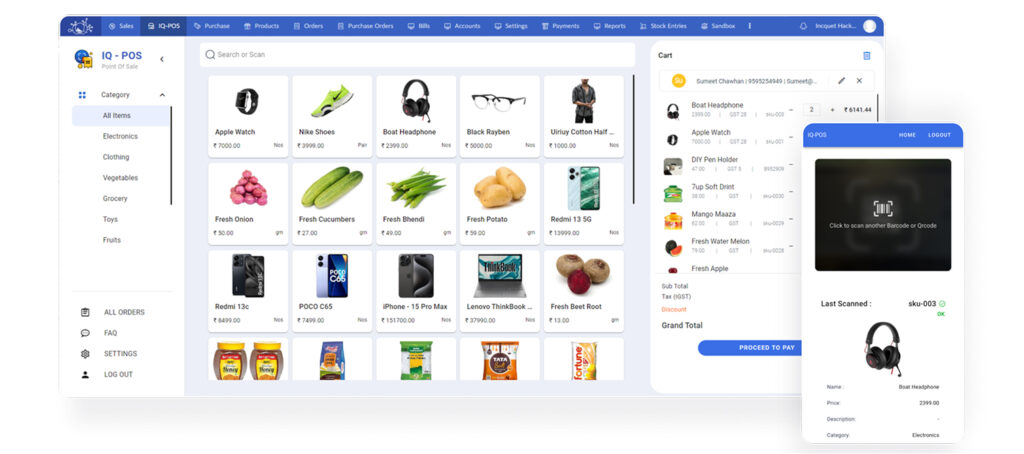
Dashboard of IQShopfloor, Modern retail ERP Solution

Want us to tailor to your retail business?
Reach out to us

Article By Ajinkya Sawant

Associate Marketing 

Manager

Incquet Solutions

Related Articles

Traditional app development takes months and costs thousands. Drag-and-drop development changes everything: business users can build custom applications in days, not months, reducing costs by up to 80% while creating solutions that perfectly match their workflows.

Digital Transformation of ERP from transaction recorder to decision engine. Learn how cloud, AI & modular architecture drive agility, intelligence & real-time performance.

Standard ERP vs Custom ERP: Why smart businesses choose custom-built solutions. Get insights from the 2025 ERP Report on implementation success factors.

Why Retail Operations Struggle?

Discover why 80% of retail operations struggle with daily operations. Learn the hidden costs of broken systems. See how unified platforms stop operational chaos.

Scroll to Top